Data Lifecycle Management (DLM) | Web Scraping Tool | ScrapeStorm
Abstract:Data Lifecycle Management (DLM) is the process of systematically managing data from creation, storage, and usage to archiving and deletion. Its goal is to enhance data quality, security, and utilization efficiency while optimizing storage costs and achieving appropriate information governance. DLM is an essential framework for ensuring data reliability and compliance, particularly in environments requiring long-term information management and privacy policy adherence. By defining when, how, how long, and where data is stored, used, or deleted, DLM enables operational efficiency and strengthened risk management. ScrapeStormFree Download
ScrapeStorm is a powerful, no-programming, easy-to-use artificial intelligence web scraping tool.
Introduction
Data Lifecycle Management (DLM) is the process of systematically managing data from creation, storage, and usage to archiving and deletion. Its goal is to enhance data quality, security, and utilization efficiency while optimizing storage costs and achieving appropriate information governance. DLM is an essential framework for ensuring data reliability and compliance, particularly in environments requiring long-term information management and privacy policy adherence. By defining when, how, how long, and where data is stored, used, or deleted, DLM enables operational efficiency and strengthened risk management.
Applicable Scene
DLM is widely applied in industries requiring long‑term data retention and structured management, such as finance, healthcare, government, and education—where clear retention periods and deletion rules are critical for information security and accuracy. In cloud migration and digital transformation projects, DLM facilitates efficient data transfer and cleanup of obsolete information. It also plays a central role in data governance and privacy enhancement initiatives.
Pros: The primary advantage of DLM is its ability to improve data quality and security while reducing costs, by establishing clear retention policies and structured workflows. A unified management framework enhances data reusability, driving operational efficiency and digital transformation. Additionally, DLM simplifies compliance and regulatory adherence, contributing to stronger corporate credibility and governance.
Cons: DLM requires clear definition of each lifecycle stage and involves multiple stakeholders, making initial design and configuration complex and time‑consuming. Processes must be maintained post‑implementation, and flexibility may be challenged when business models or system environments evolve. Data phase‑out and deletion demand strict procedures to avoid residual data, requiring dedicated personnel and resources.
Legend
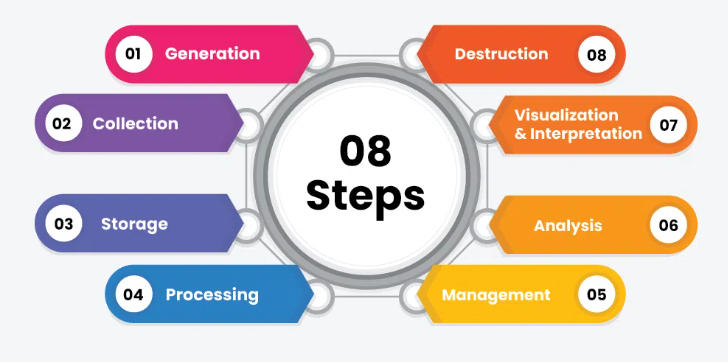
1. Diagram of Data Lifecycle Management (DLM).
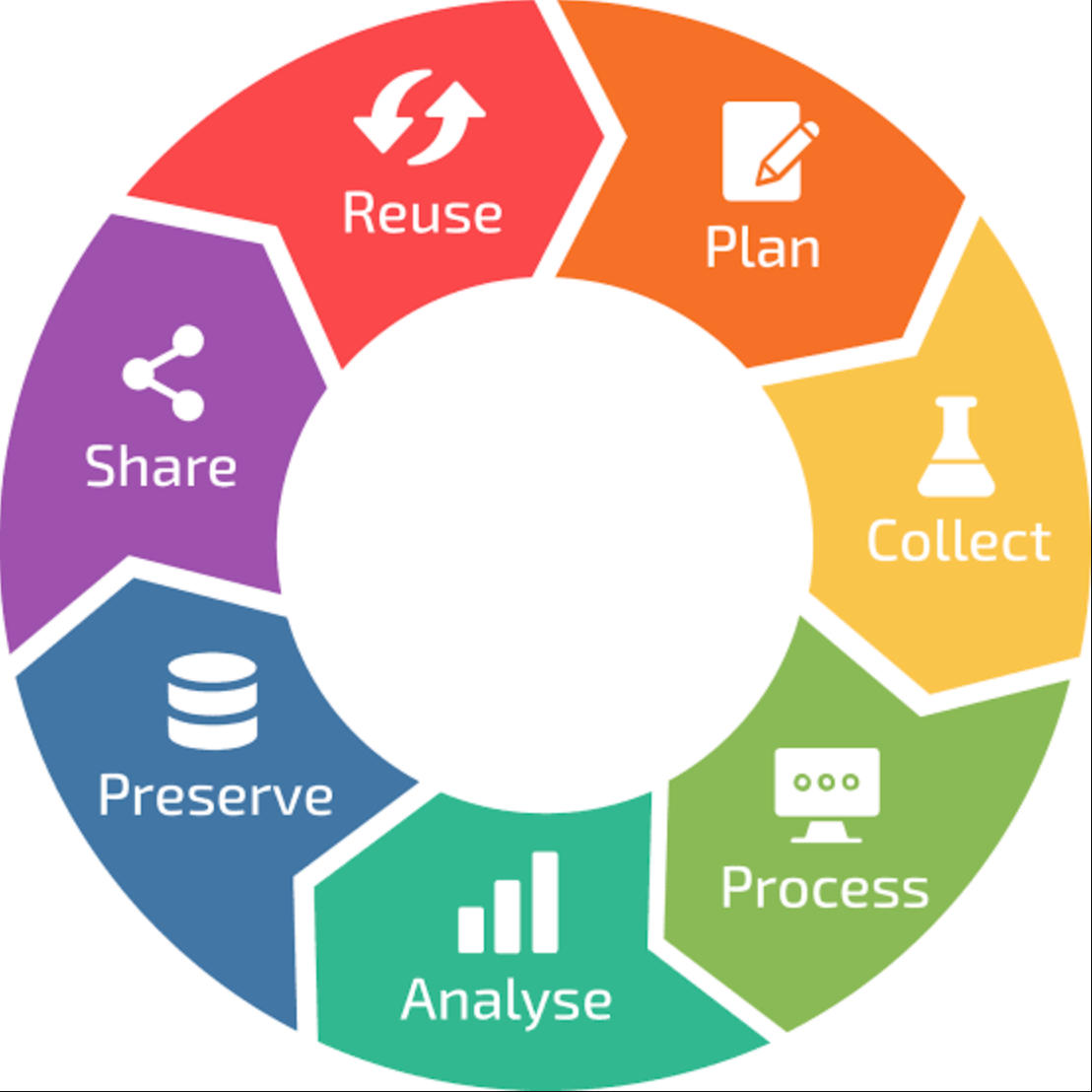
2. The eight stages of Data Lifecycle Management.