Fog Liquid Water Content | Web Scraping Tool | ScrapeStorm
Abstract:Fog Liquid Water Content (LWC, g/m³) refers to the mass of liquid fog droplets contained in a unit volume of air, usually expressed in grams per cubic meter. This metric describes the amount of liquid water present in fog and is an important parameter for characterizing fog intensity, microphysical structure, and impact potential. It is widely used in meteorological observation, atmospheric research, traffic safety, and aviation operations. ScrapeStormFree Download
ScrapeStorm is a powerful, no-programming, easy-to-use artificial intelligence web scraping tool.
Introduction
Fog Liquid Water Content (LWC, g/m³) refers to the mass of liquid fog droplets contained in a unit volume of air, usually expressed in grams per cubic meter. This metric describes the amount of liquid water present in fog and is an important parameter for characterizing fog intensity, microphysical structure, and impact potential. It is widely used in meteorological observation, atmospheric research, traffic safety, and aviation operations.
Applicable Scene
It is suitable for fog microphysical observation, low-visibility weather analysis, airport and highway operation support, transmission line icing risk assessment, environmental monitoring, and numerical weather model validation. For example, by measuring fog liquid water content, analysts can assess the degree of water accumulation in dense fog and provide support for road warnings, aviation de-fogging operations, and power facility protection.
Pros: Fog liquid water content directly reflects the amount of condensate in fog and provides more microphysical insight than visibility alone. It is especially valuable for analyzing the effects of fog on surface deposition, moisture accumulation, and icing processes. When combined with droplet size distribution, temperature, humidity, and wind speed, it supports more comprehensive study of fog formation, development, and dissipation.
Cons: This metric usually requires specialized instruments, making observation more costly and demanding in terms of maintenance and calibration. Differences among instruments and retrieval methods may introduce systematic inconsistencies in the data. In addition, although LWC reflects liquid water amount, it does not by itself fully represent fog extent, duration, or actual hazard severity.
Legend
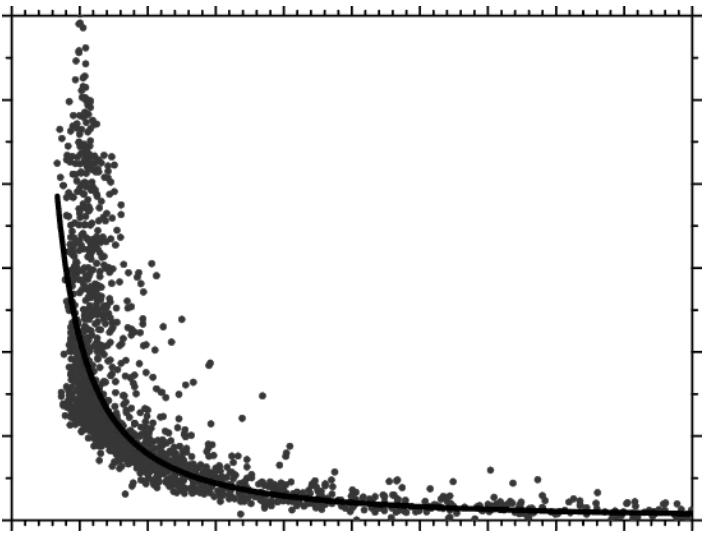
1. Fog Liquid Water Content (LWC) versus visibility (VIS) during the period 03.11.2000 1 through 05.12.2000 at the Waldstein research site.
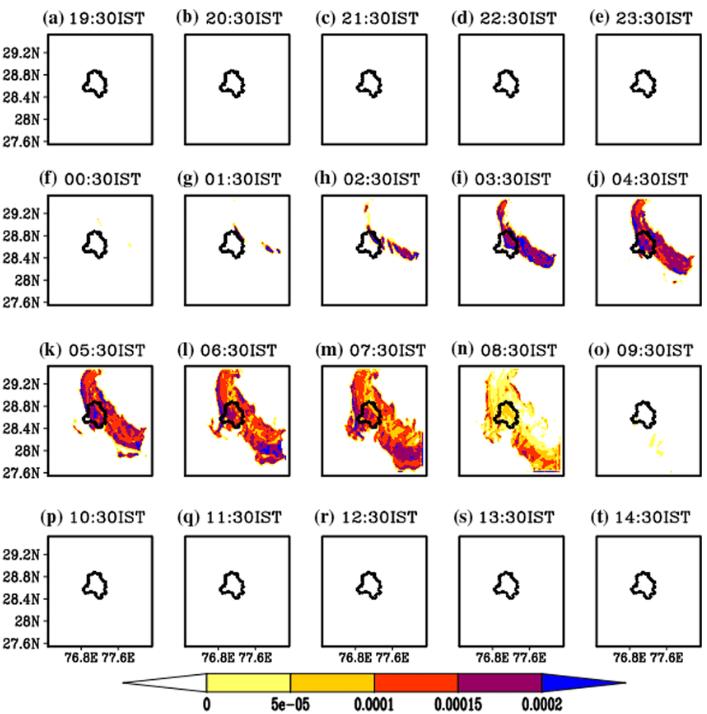
2. Liquid water content (kg/kg) from WRF simulations.