
Solar Altitude Angle | Web Scraping Tool | ScrapeStorm
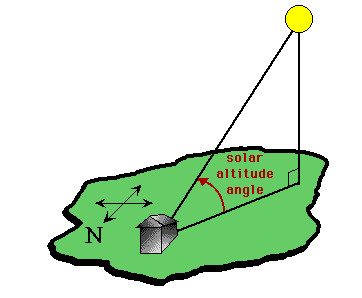
Abstract:Solar altitude angle refers to the angle between the sun's rays and the horizontal plane of the Earth's surface. ScrapeStormFree Download
ScrapeStorm is a powerful, no-programming, easy-to-use artificial intelligence web scraping tool.
Introduction
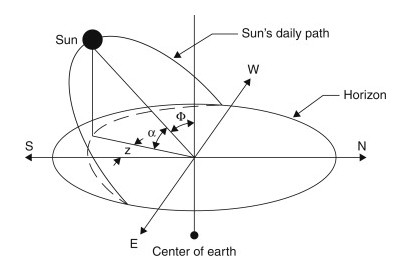
Solar altitude angle refers to the angle between the sun’s rays and the horizontal plane of the Earth’s surface. It is one of the fundamental astronomical parameters describing the sun’s position in the sky, with a range of -90° to 90° (negative values indicate the sun is below the horizon, i.e., nighttime). Its magnitude varies regularly with geographic latitude, season (declination angle), and time of day (hour angle), determined jointly by the Earth’s rotation and revolution. The solar altitude angle at solar noon typically reaches its daily maximum and serves as important fundamental data for calculating sunshine intensity, building daylighting design, solar resource assessment, and atmospheric correction of remote sensing imagery.
Applicable Scene
Suitable for various engineering and research scenarios that require quantifying solar radiation intensity or geometric relationships. Typical applications include: photovoltaic power plant design and power generation forecasting, building spacing and shading design for daylighting, agricultural greenhouse light management, atmospheric correction and topographic shadow correction of remote sensing satellite imagery, surface radiation balance analysis in climate change research, and lighting condition assessment in photogrammetry.
Pros: Physically well-defined with mature astronomical algorithms, enabling precise calculation based on latitude, date, and time without relying on measured environmental data; provides direct engineering guidance value for fields such as solar energy utilization, remote sensing image processing, and building energy efficiency.
Cons: As a purely geometric angle, it cannot independently reflect the impact of atmospheric attenuation (such as clouds, aerosols, and water vapor) on the actual irradiance received at the surface; under overcast or rainy conditions, even when the solar altitude angle is high, actual lighting conditions may still be poor.
Legend
1. Solar Altitude Angle.
2. Solar Altitude Angle.
Related Article
Reference Link
https://www.sciencedirect.com/topics/engineering/solar-altitude-angle