
Lightning Count (events/time period) | Web Scraping Tool | ScrapeStorm
Abstract:Lightning Count (events/time period) refers to the total number of lightning occurrences recorded within a specified time interval, such as per minute, hour, day, or during a single weather event. This metric is used to reflect the frequency and variation of lightning activity and is widely applied in meteorological monitoring, disaster prevention, power system protection, aviation operations, and outdoor safety management. ScrapeStormFree Download
ScrapeStorm is a powerful, no-programming, easy-to-use artificial intelligence web scraping tool.
Introduction
Lightning Count (events/time period) refers to the total number of lightning occurrences recorded within a specified time interval, such as per minute, hour, day, or during a single weather event. This metric is used to reflect the frequency and variation of lightning activity and is widely applied in meteorological monitoring, disaster prevention, power system protection, aviation operations, and outdoor safety management.
Applicable Scene
It is suitable for lightning warning, severe convective weather analysis, lightning protection assessment for power transmission and distribution facilities, airport and port operation safety, meteorological support for large events, and wildfire risk monitoring in forested areas. For example, by counting lightning events during a thunderstorm, decision-makers can determine whether lightning activity is at a high level and support work suspension, equipment shutdown, and flight scheduling decisions.
Pros: Lightning count is intuitive and relatively easy to obtain, allowing rapid assessment of how active lightning is during a given period. When combined with lightning location data, radar echoes, precipitation intensity, and wind field information, it can also help analyze the development of severe convective systems and identify high-risk lightning zones.
Cons: This metric mainly represents the number of lightning events and cannot independently describe lightning energy, strike type, affected area, or damage severity. Differences in detection accuracy, coverage, and identification algorithms among monitoring networks may also introduce bias. In addition, under complex weather conditions, relying solely on lightning count may not provide a complete risk assessment.
Legend
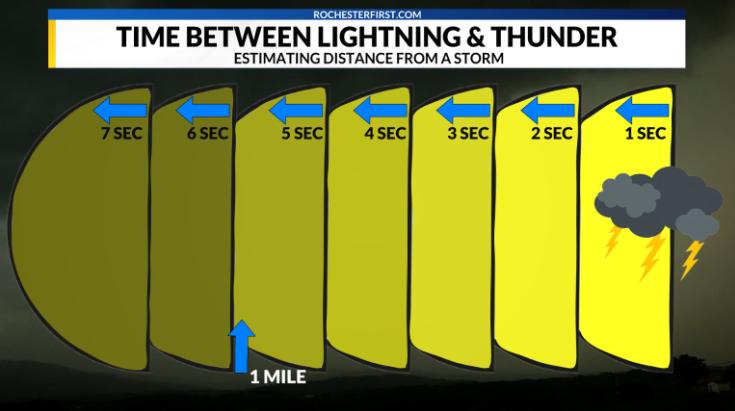
1. Time between lightening & thunder.
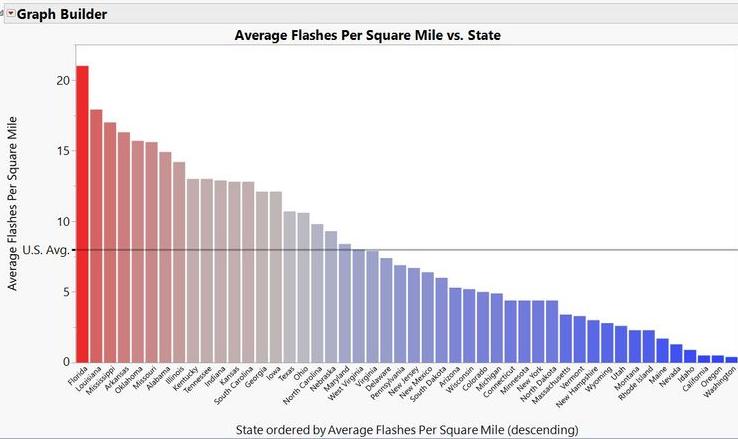
2. Average strikes per square mile by state.
Related Article
Reference Link
https://www.weather.gov/fgz/Lightning