Docusaurus | Web Scraping Tool | ScrapeStorm
Abstract:Docusaurus is an open-source documentation-oriented CMS tool developed by Meta (formerly Facebook), enabling the creation, management, and delivery of React-based blogs and documentation sites. ScrapeStormFree Download
ScrapeStorm is a powerful, no-programming, easy-to-use artificial intelligence web scraping tool.
Introduction
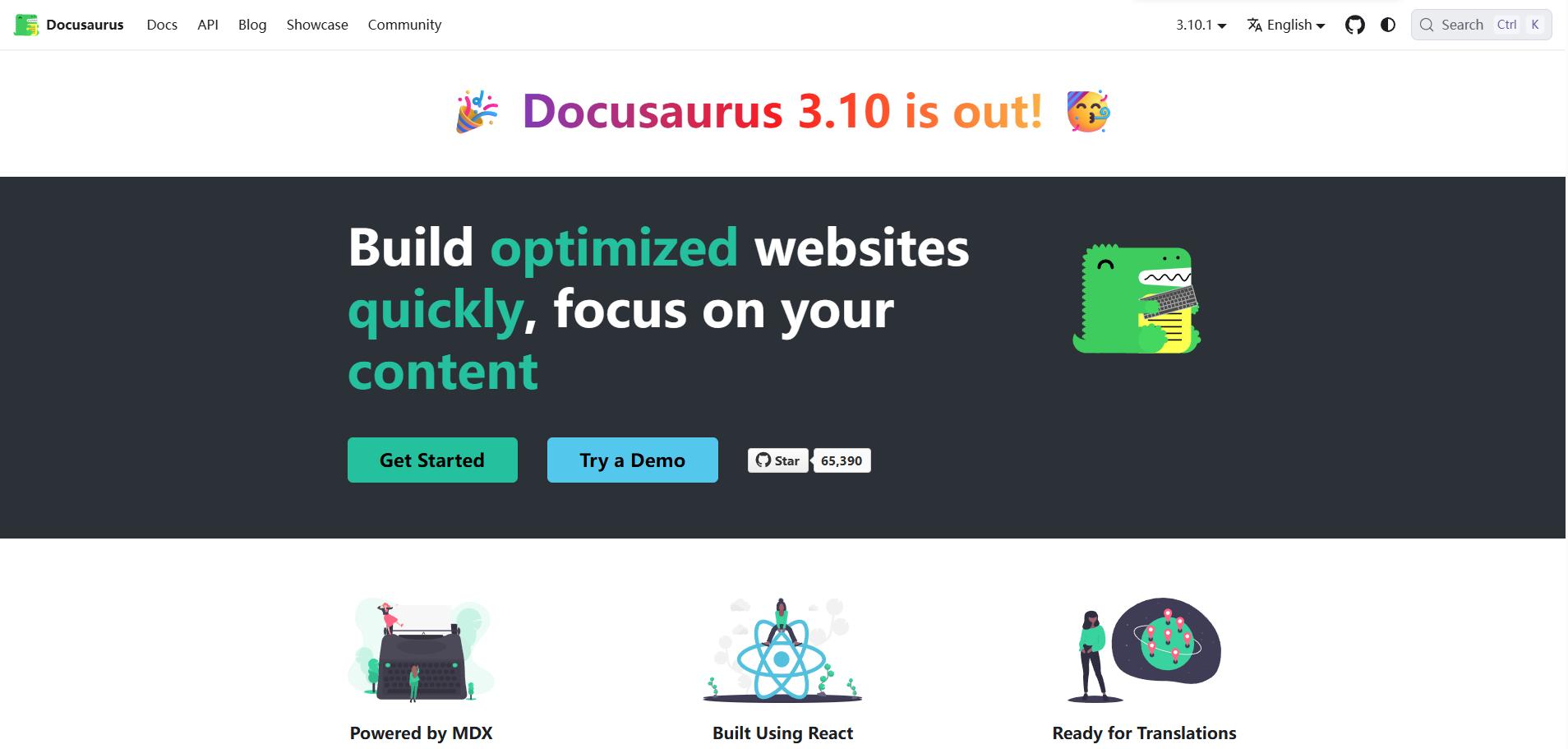
Docusaurus is an open-source documentation-oriented CMS tool developed by Meta (formerly Facebook), enabling the creation, management, and delivery of React-based blogs and documentation sites. It adopts a simpler and faster structure than traditional CMS platforms, allowing content such as technical documentation, product introductions, and blog articles to be edited and managed through an intuitive interface. Built around React components, Docusaurus allows developers to achieve advanced customization and extensibility. It also uses a slash-based routing structure and is designed with SEO and performance optimization in mind. These features make it a scalable documentation platform suitable for a wide range of uses, including technical documentation websites and official brand sites.

Applicable Scene
Docusaurus is particularly suitable for websites aimed at providing technical or educational information. For example, it can be used for open-source project documentation, product user guides, API documentation, blogs, or company portfolio sites—especially multi-page sites with rich and well-structured content. It is also useful for web media platforms where technical articles are updated frequently, as it offers CMS-like flexibility along with fast page rendering. With Markdown-based editing and a UI powered by React and its ecosystem, Docusaurus supports versatile documentation management, including account and comment integration, channel organization, and slash-based page structuring.
Pros: The greatest strengths of Docusaurus are its high degree of customization based on React and its flexible slash-based page management. This makes it easy to build documentation surfaces for technical audiences while also supporting smooth operation for content such as blogs and news. By leveraging React components, teams can customize UI and UX down to a very fine level of detail. Its SEO-friendly structure also makes it suitable for scenarios where discoverability in search engines is important, such as official documentation and online manuals. In addition, Docusaurus can work alongside static site generators such as Hugo and Jekyll, enabling deployment in backend-free environments and helping improve production efficiency while reducing server load.
Cons: Docusaurus is built on React and JavaScript, so technical knowledge is required. In particular, for developers who are not comfortable with React or for teams with limited frontend development experience, initial adoption and customization may become burdensome. Also, by design, Docusaurus is not a backend-driven CMS but operates as a static site generator, so if dynamic content management or built-in account management is required, alternative solutions may need to be considered. Furthermore, for large-scale projects, performance optimization and long build times may require more advanced configuration, meaning that effective use of Docusaurus can demand a certain level of technical expertise and resources.
Legend
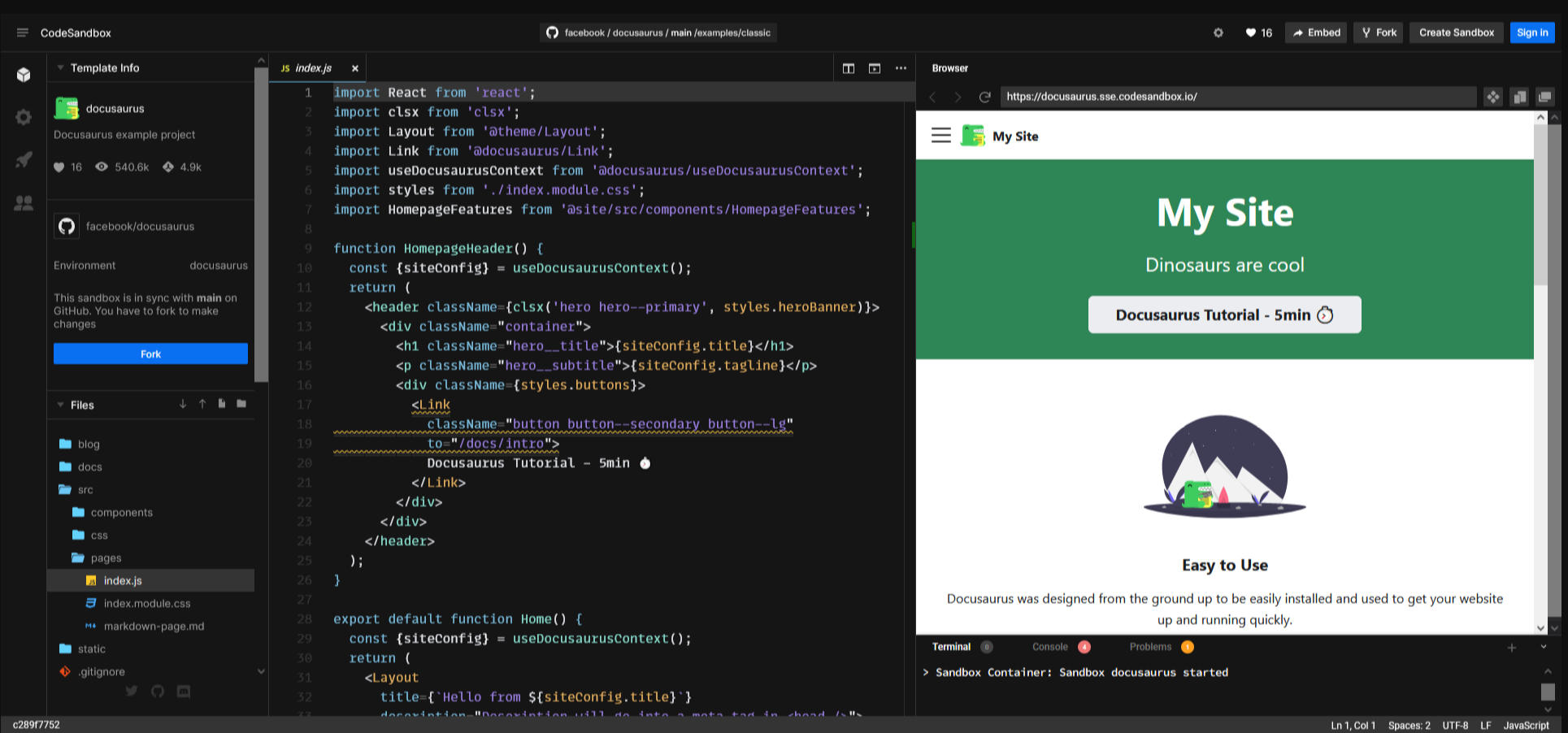
1. Create static HTML pages for publishing.
2. Docusaurus official website.