
Saturation Vapor Pressure (SVP) | Web Scraping Tool | ScrapeStorm
Abstract:Saturation Vapor Pressure (SVP) is the partial pressure exerted by water vapor when it is in thermodynamic equilibrium with liquid water (or ice) at a given temperature, typically expressed in hectopascals (hPa) or kilopascals (kPa). ScrapeStormFree Download
ScrapeStorm is a powerful, no-programming, easy-to-use artificial intelligence web scraping tool.
Introduction
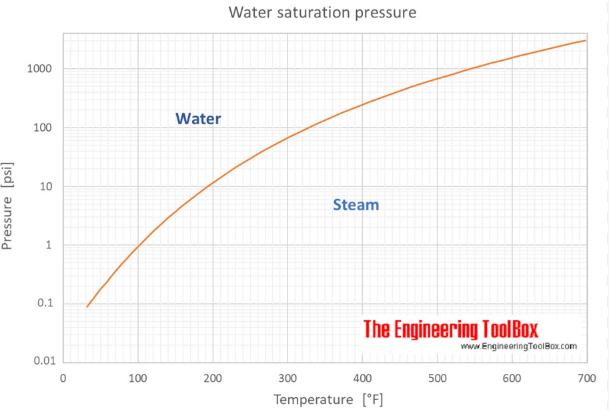
Saturation Vapor Pressure (SVP) is the partial pressure exerted by water vapor when it is in thermodynamic equilibrium with liquid water (or ice) at a given temperature, typically expressed in hectopascals (hPa) or kilopascals (kPa). It is a core thermodynamic parameter in atmospheric physics and meteorology, representing the maximum capacity of air to hold water vapor at a specified temperature. SVP increases exponentially with temperature, a relationship precisely described by the Clausius–Clapeyron equation. In operational practice, empirical formulas such as the Tetens formula, Goff–Gratch equation, or Magnus formula are commonly used for engineering calculations. SVP is fundamental to understanding condensation, evaporation, precipitation, and cloud microphysical processes, and serves as a key input variable for calculating relative humidity, dew point temperature, potential evapotranspiration, atmospheric stability, and many other meteorological and hydrological indicators.
Applicable Scene
Saturation vapor pressure has broad applications across meteorology, hydrology, agriculture, environmental monitoring, and engineering thermodynamics. In weather forecasting, it is critical for assessing cloud formation, fog occurrence, and precipitation potential, and is used as a core variable in numerical weather prediction models for initialization and physical parameterization. In agrometeorology, vapor pressure deficit (VPD) derived from SVP is widely used to evaluate crop transpiration stress and irrigation requirements, supporting precision agriculture management. In hydrology and water resources, SVP is a key parameter for estimating potential and actual evapotranspiration, underpinning water balance analysis and drought monitoring. In building environment and HVAC engineering, SVP is used to control indoor humidity, prevent condensation and mold growth, and ensure building comfort and durability. Additionally, SVP is an indispensable thermodynamic reference parameter in industrial drying, food processing, warehouse management, and climate modeling.
Pros: Saturation vapor pressure offers several notable advantages at both theoretical and applied levels. First, it has a clear physical meaning, grounded in robust thermodynamic theory and closely linked to classical laws such as the Clausius–Clapeyron equation, providing a rigorous scientific foundation. Second, SVP has a deterministic functional relationship with temperature, allowing it to be accurately calculated from temperature data alone without complex instrument calibration or empirical corrections, making it cost-effective and easy to use. Third, SVP is highly standardized and internationally recognized; formulas such as Tetens and Goff–Gratch have been widely adopted by meteorological organizations worldwide, ensuring comparability across regions and time periods. Fourth, as an intermediate variable, SVP can be rapidly interconverted with other meteorological elements such as relative humidity and dew point temperature, featuring low integration barriers and high computational efficiency in operational systems, making it suitable for large-scale numerical simulation and real-time monitoring.
Cons: Despite its well-defined mathematical formulation, SVP has several limitations in practical applications. First, SVP is strictly defined for a flat pure water surface, whereas in the real atmosphere, condensation typically occurs on curved droplet surfaces (e.g., cloud droplets) or on solutions containing solutes. The actual saturation vapor pressure is affected by the Kelvin effect and Raoult’s law, which may cause deviations from the theoretical value. Second, most empirical calculation formulas (e.g., Tetens) are fitted relationships that exhibit significantly larger errors under extreme temperature conditions (e.g., below -40°C or above 50°C), with clear boundary limitations in their applicability. Third, as a thermodynamic state parameter, SVP does not contain dynamic information about air mass motion and cannot fully describe the atmospheric water cycle on its own. Fourth, in extreme environments such as high altitudes, polar regions, or deserts where observational data are sparse or temperature measurements are less accurate, SVP calculation errors can be further amplified, consequently affecting the reliability of downstream applications that depend on this parameter, such as evapotranspiration estimation and cloud microphysics modeling.
Legend
1. Saturation Vapor Pressure.
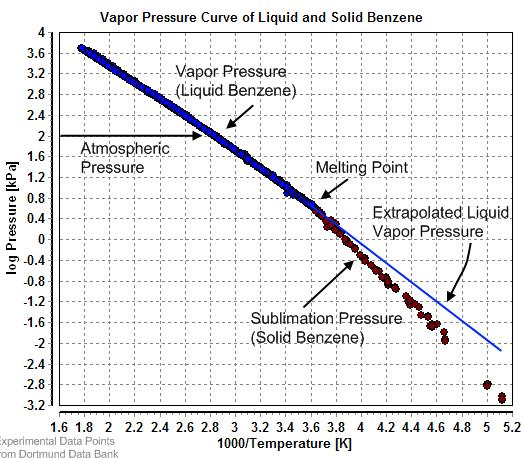
2. Saturation Vapor Pressure.
Related Article
Reference Link
https://en.wikipedia.org/wiki/Vapor_pressure#Meaning_in_meteorology