
Sky Brightness | Web Scraping Tool | ScrapeStorm
Abstract:Sky Brightness refers to the apparent brightness of the sky background as observed from the ground. ScrapeStormFree Download
ScrapeStorm is a powerful, no-programming, easy-to-use artificial intelligence web scraping tool.
Introduction
Sky Brightness refers to the apparent brightness of the sky background as observed from the ground. It is influenced by factors such as solar altitude, moonlight, cloud cover, atmospheric scattering, air pollution, and artificial lighting. It is an important indicator in astronomy, environmental monitoring, meteorological analysis, and urban light pollution assessment.
Applicable Scene
It is commonly used in observatory site selection, night sky quality evaluation, urban lighting management, ecological research, and weather observation. For example, measuring nighttime sky brightness can help determine the level of light pollution in an area or assess whether observing conditions are suitable for astrophotography and deep-sky observation.
Pros: Sky brightness provides a direct reflection of sky environmental quality and can support decisions in astronomical observation assessment, lighting optimization, and environmental governance. With long-term monitoring data, it can also be used to analyze seasonal variation and the impact of artificial light sources on the night sky.
Cons: Sky brightness is affected by many natural and human factors, so measurements can fluctuate significantly. Results are also sensitive to weather, geographic location, and instrument accuracy. Without standardized methods and regular calibration, data comparability across time and place may be limited.
Legend
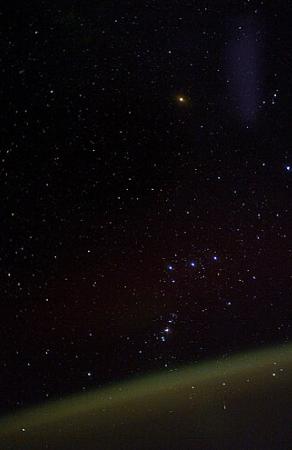
1. Airglow made visible from aboard the ISS.
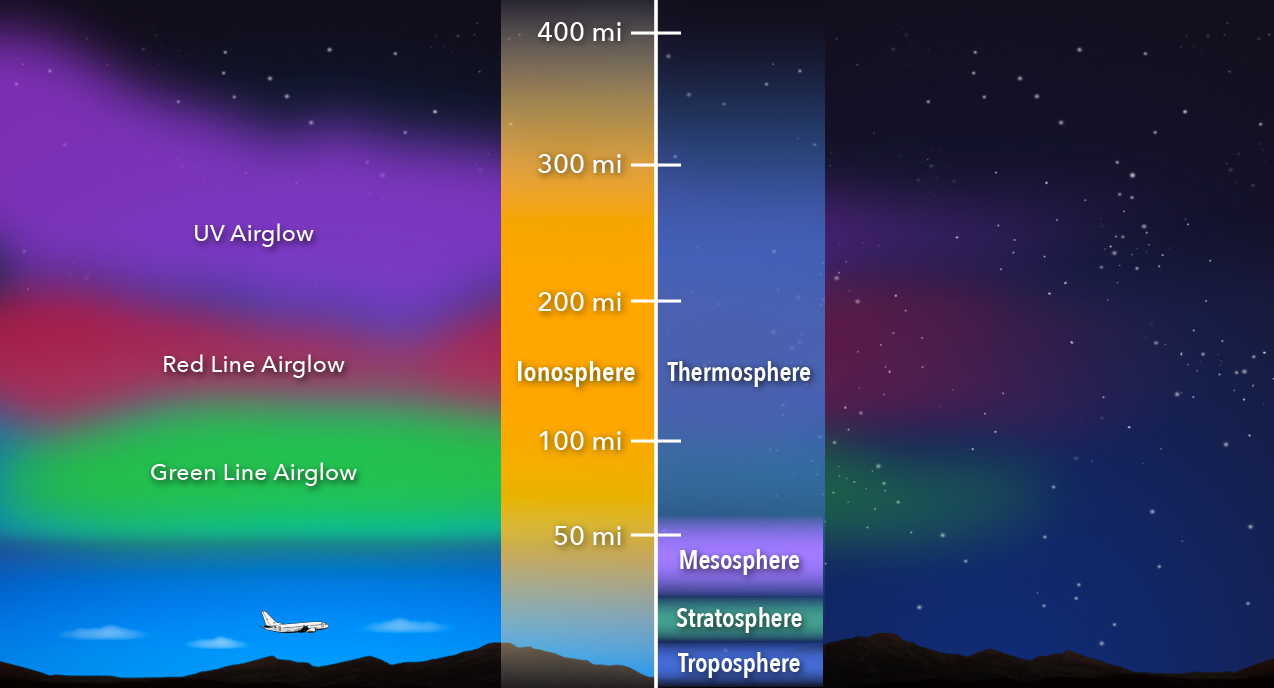
2. Airglow contributions from different layers of the atmosphere.
Related Article
Reference Link
https://en.wikipedia.org/wiki/Sky_brightness