
Data Middle Platform | Web Scraping Tool | ScrapeStorm
Abstract:Data Middle Platform refers to a core data infrastructure that unifies, standardizes, and manages business data, system data scattered across an enterprise or organization, as well as external data in a reusable manner. ScrapeStormFree Download
ScrapeStorm is a powerful, no-programming, easy-to-use artificial intelligence web scraping tool.
Introduction
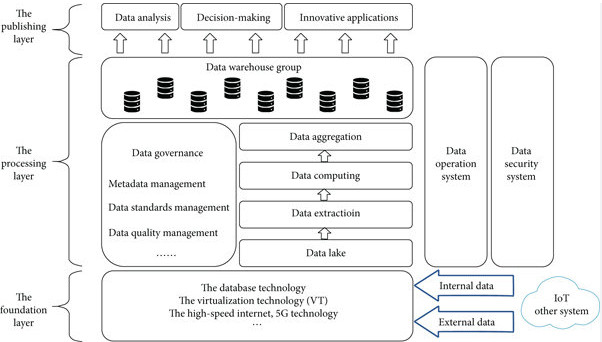
Data Middle Platform refers to a core data infrastructure that unifies, standardizes, and manages business data, system data scattered across an enterprise or organization, as well as external data in a reusable manner. It consistently provides data services to various application systems and data analysis operations. The primary goal of a Data Middle Platform is to break down data silos between departments, abstract data assets into generic data services, and enhance data utilization efficiency while enabling intelligent and refined decision-making capabilities.
Applicable Scene
A Data Middle Platform is well-suited for large organizations or platform-based business scenarios with multiple business systems and services operating in parallel. It is widely applied in enterprise-level data integration, business intelligence (BI) and data analysis, AI/machine learning platforms, real-time decision support, as well as digital government and smart city initiatives. Particularly in environments requiring cross-business and cross-departmental data reuse and collaboration, a Data Middle Platform can fully leverage its value.
Pros: The initial planning and construction phase of a Data Middle Platform requires substantial investment costs and professional expertise. Inadequate data model design or business (business, which can be translated as “business analysis” or “business mapping” in this context) may instead lead to increased system complexity. Moreover, an excessive focus on generalization may weaken responsiveness to the immediate needs of frontline businesses. Since a Data Middle Platform often involves adjustments to organizational structures and business processes, it is not merely a technical issue but also requires continuous coordination and promotion at the management and organizational levels.
Cons: On the other hand, as MDS is based on combining multiple SaaS tools, poor overall design may lead to tool proliferation and cost increases. Responsibility boundaries between vendors can be unclear, making fault isolation challenging. Furthermore, without organizational design for data governance, security, and permission management, excessive analytical freedom may result in weak control, necessitating a certain level of data architecture design capability.
Legend
1. Data Middle Platform.
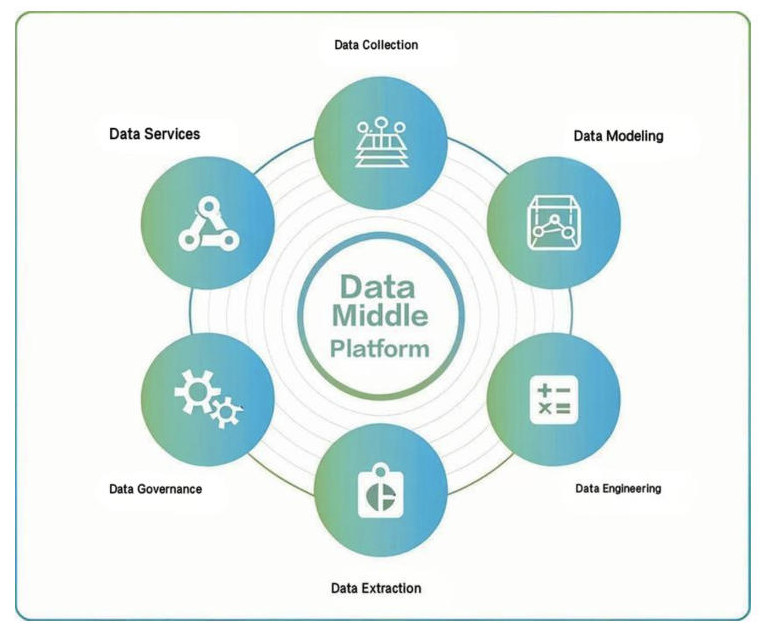
2. Data Middle Platform.
Related Article
Reference Link
https://www.idigital.com.cn/data-center1
https://www.linkedin.com/pulse/data-middle-platform-core-engine-enterprise-digital-awcpc