
Outgoing Longwave Radiation (OLR) | Web Scraping Tool | ScrapeStorm
Abstract:Outgoing Longwave Radiation (OLR) is a key indicator in meteorology and climatology, representing the amount of energy absorbed by the Earth's surface and atmosphere that is emitted as infrared radiation into space. ScrapeStormFree Download
ScrapeStorm is a powerful, no-programming, easy-to-use artificial intelligence web scraping tool.
Introduction
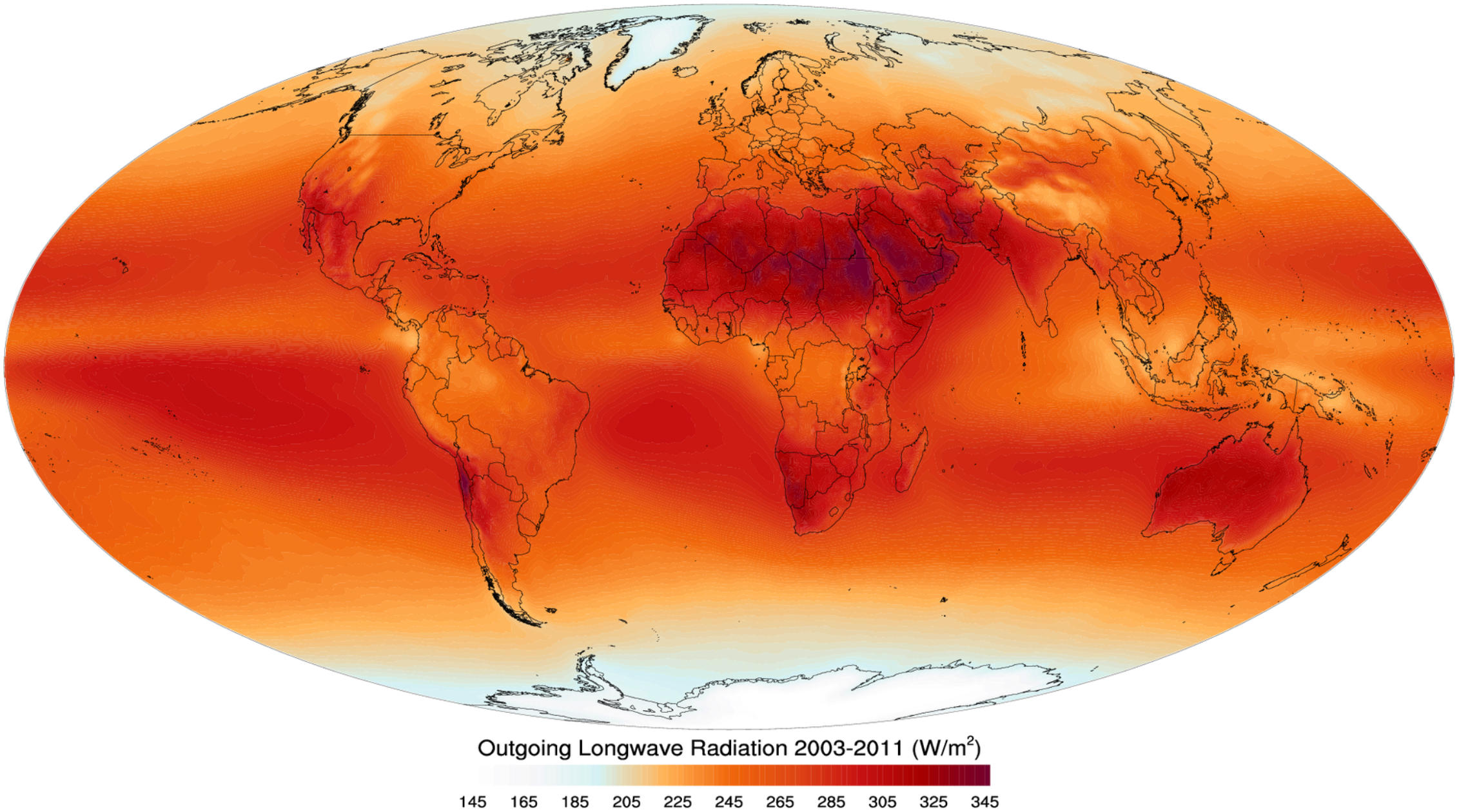
Outgoing Longwave Radiation (OLR) is a key indicator in meteorology and climatology, representing the amount of energy absorbed by the Earth’s surface and atmosphere that is emitted as infrared radiation into space. Primarily measured via satellite observations, it is expressed in watts per square meter (W/m²). As a crucial component of Earth’s radiation budget, OLR is strongly influenced by factors such as cloud cover, convective activity, water vapor content, and surface temperature. Consequently, it serves as fundamental data in the analysis of atmospheric circulation and climate change.
Applicable Scene
Outgoing Longwave Radiation (OLR) is utilized across various fields of meteorology and climate science. In tropical regions, its characteristic decrease during the development of cumulonimbus clouds is leveraged to analyze convective activity, monsoon dynamics, and the Madden–Julian Oscillation (MJO). On a global scale, OLR is applied to monitor El Niño and La Niña events, validate general circulation models, and assess long-term climate variability. Furthermore, it serves as a validation metric for numerical weather prediction models and reanalysis datasets, contributing to the understanding and improved predictive accuracy of the climate system.
Pros: A major strength of Outgoing Longwave Radiation lies in its global and uniform availability through satellite observations, enabling large-scale analyses across ocean regions and developing areas where ground-based measurements are scarce. Due to its high correlation with cloud cover and convective activity, OLR provides an intuitive and visually accessible means to assess atmospheric dynamics, making it particularly suitable for tropical meteorology and climate diagnostics. Moreover, its continuous long-term data records support trend analysis in climate change studies and facilitate inter‑model comparisons.
Cons: A key limitation of OLR is its dependence on multiple overlapping factors—such as cloud-top height, cloud fraction, water vapor content, and surface temperature—which complicates the unambiguous attribution of physical causes based solely on OLR data. Additionally, systematic errors may arise from differences in satellite sensors or retrieval algorithms, requiring careful attention to data consistency and correction procedures in long-term analyses. Since OLR does not directly provide detailed vertical structure information, integrated analysis with other meteorological variables or observational datasets is essential for comprehensive interpretation.
Legend
1. Annual average longwave radiation of Earth from 2003 to 2010.
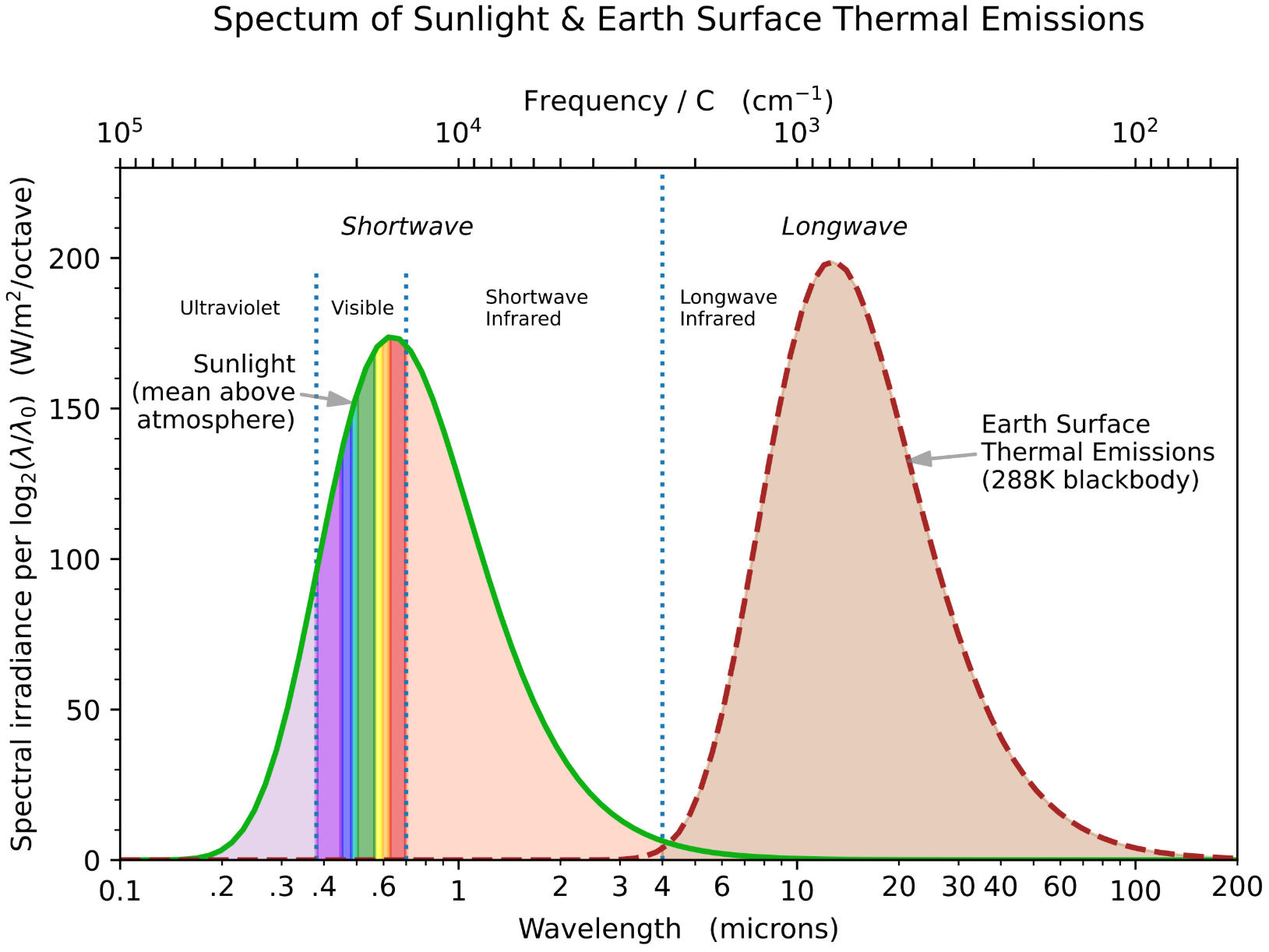
2. Solar spectral intensity (average at the top of the atmosphere) and thermal radiation emitted from Earth’s surface.
Related Article
Reference Link
https://en.wikipedia.org/wiki/Outgoing_longwave_radiation
https://neo.gsfc.nasa.gov/view.php?datasetId=CERES_LWFLUX_M
https://www.ncei.noaa.gov/products/climate-data-records/outgoing-longwave-radiation-daily