Hexo | Web Scraping Tool | ScrapeStorm
Abstract:Hexo is an open-source static site generator that runs on Node.js. It converts articles and pages written in Markdown and similar formats into static files composed of HTML, CSS, and JavaScript to generate blogs and websites. The generated files can be published to static hosting services such as GitHub Pages, Netlify, and Vercel. Designs and functionality can be extended using themes and plugins, and its notable characteristic is that operations from article creation to publication can be carried out in a relatively simple manner. Because there is no need to run a database on the server side, it enables the construction of a lightweight and easy-to-manage blog environment. ScrapeStormFree Download
ScrapeStorm is a powerful, no-programming, easy-to-use artificial intelligence web scraping tool.
Introduction
Hexo is an open-source static site generator that runs on Node.js. It converts articles and pages written in Markdown and similar formats into static files composed of HTML, CSS, and JavaScript to generate blogs and websites. The generated files can be published to static hosting services such as GitHub Pages, Netlify, and Vercel. Designs and functionality can be extended using themes and plugins, and its notable characteristic is that operations from article creation to publication can be carried out in a relatively simple manner. Because there is no need to run a database on the server side, it enables the construction of a lightweight and easy-to-manage blog environment.

Applicable Scene
Hexo is suitable for uses involving the regular publication of articles and pages, such as personal blogs, technical blogs, documentation sites, and project introduction pages. It is particularly well-suited for developers accustomed to writing in Markdown and for teams that want to manage content and settings via Git. Because its architecture serves static files, it enables high-speed content delivery using a CDN while reducing server maintenance burdens. In addition, when combined with services such as GitHub Pages, blogs can be published at relatively low cost. On the other hand, if article editing in a browser or a complex content approval workflow is required, it is necessary to consider integration with another CMS or adjustments to operational methods.
Pros: Hexo’s advantage lies in the ease with which articles can be created in Markdown and static sites generated through command-line operations. The generated site is served as static files, resulting in fast display speeds and eliminating the need to maintain a server-side database or runtime environment. Themes and plugins are available, allowing designs and functionality to be flexibly added. Additionally, articles and settings are easy to manage with Git, making it simple to review change histories and support collaborative work among multiple people. By leveraging static hosting services, operational costs and security-related management burdens can be reduced.
Cons: Because Hexo requires a Node.js environment and command-line operations to write articles and generate the site, it may be difficult to use for users without technical knowledge. Article editing is primarily file-based, so it does not provide, by default, a browser-based management interface or visual editing features like those found in typical CMSs. Maintenance is also required in response to theme and plugin compatibility and Node.js version changes. Since the site must be regenerated and published every time an article is updated, build times and publication workflows can become challenges for sites with very large content volumes or frequent update requirements. Implementing dynamic search, membership features, comments, and similar functionality requires external services or additional development.
Legend
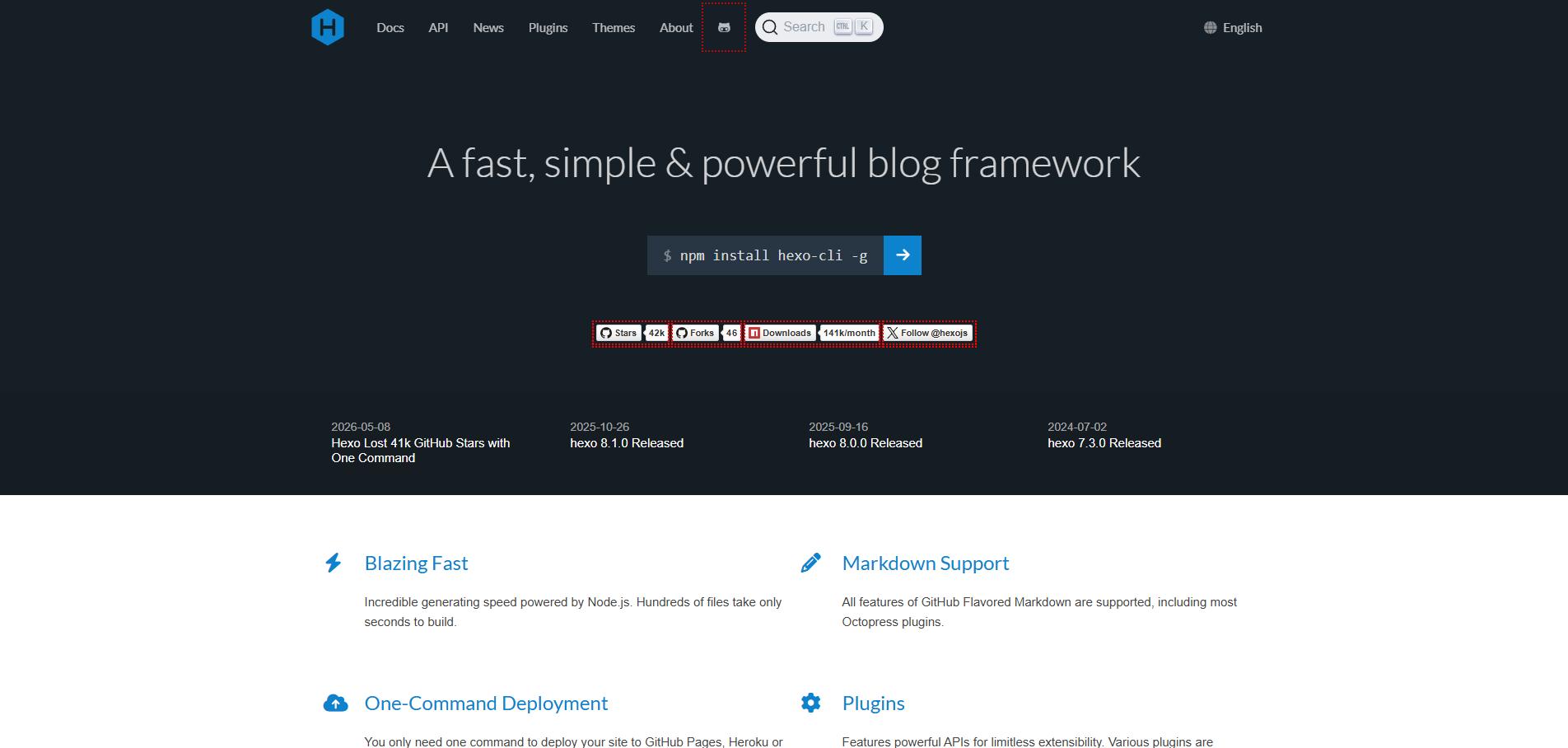
1. Hexo homepage.
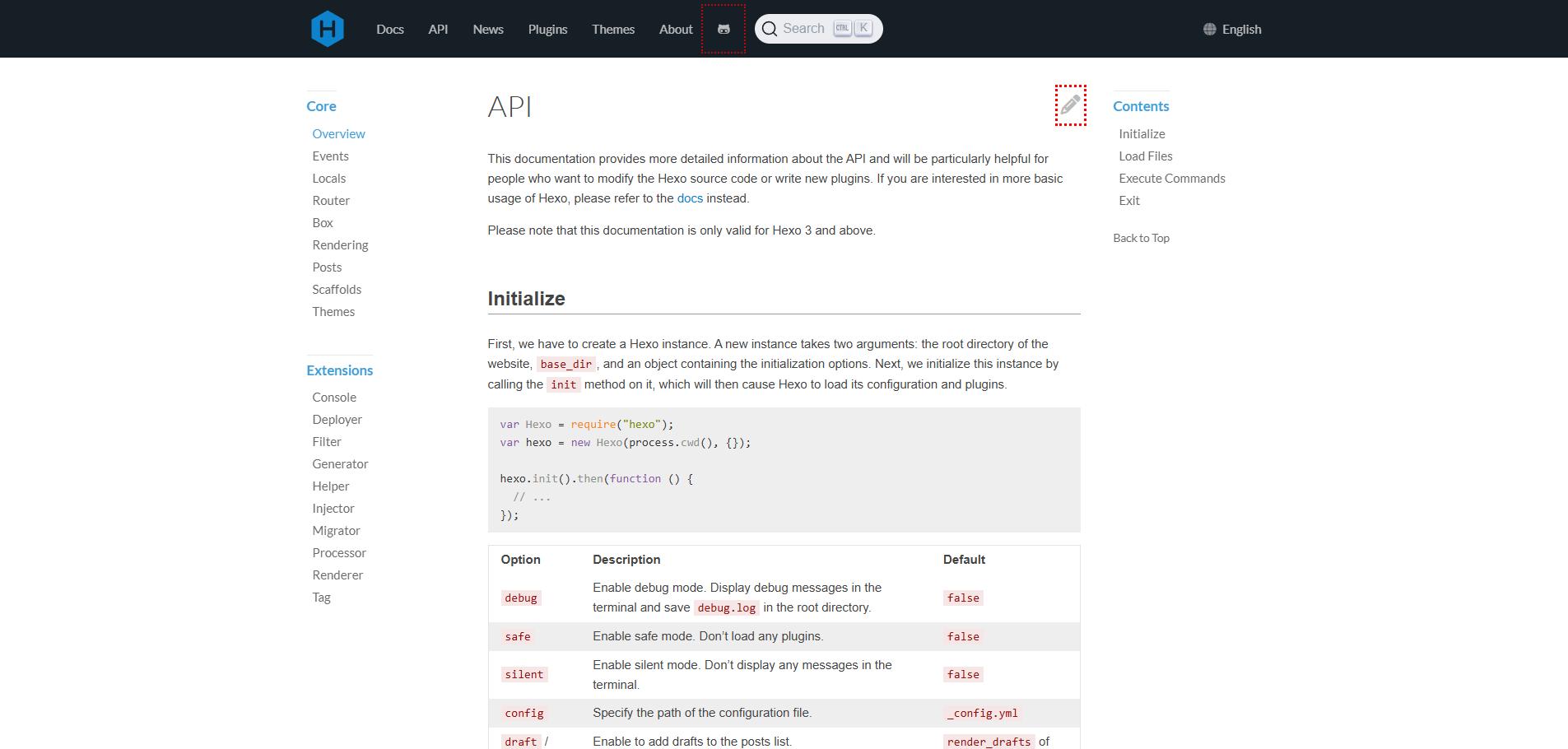
2. Hexo API tutorial.