
Soil Electrical Conductivity (EC) | Web Scraping Tool | ScrapeStorm
Abstract:Soil Electrical Conductivity (EC) refers to the ability of soil to conduct electrical current, typically expressed in millisiemens per meter (mS/m) or decisiemens per meter (dS/m). ScrapeStormFree Download
ScrapeStorm is a powerful, no-programming, easy-to-use artificial intelligence web scraping tool.
Introduction
Soil Electrical Conductivity (EC) refers to the ability of soil to conduct electrical current, typically expressed in millisiemens per meter (mS/m) or decisiemens per meter (dS/m). It is an important comprehensive indicator reflecting soil salinity content, moisture status, textural characteristics, and cation exchange capacity. Soil EC is influenced by multiple factors including soluble salt concentration, soil water content, temperature, texture, and organic matter content, finding wide applications in precision agriculture management, soil salinization monitoring, and environmental assessment.
Applicable Scene
Soil electrical conductivity is widely used in precision farming, saline-alkali land remediation, soil fertility assessment, environmental monitoring, and geological exploration. In agriculture, it is used to delineate soil management zones, guide variable-rate fertilization and irrigation, and serves as a crucial basis for implementing precision agriculture. In salinization monitoring, soil electrical conductivity can rapidly reflect the degree of soil salt accumulation, providing data support for saline-alkali land improvement and crop planting structure adjustment. In environmental science, it is used to assess contaminated sites, monitor the impact of landfill leachate, and track the extent of seawater intrusion. Furthermore, in geological and archaeological research, soil electrical conductivity measurements can also help identify soil stratification, paleochannels, and buried remains.
Pros: Soil EC measurement is rapid, simple, and relatively low-cost, supporting in-situ real-time monitoring and large-scale grid sampling. It shows good correlations with multiple key soil properties (such as salinity, moisture, texture, organic matter), serving as a versatile comprehensive soil indicator. Through electromagnetic induction or contact sensors, high-resolution spatial distribution data can be obtained, providing detailed decision-making support for precision agriculture and resource management. Furthermore, soil EC offers early warning for environmental degradation issues such as soil salinization, facilitating timely prevention and control measures.
Cons: Soil EC is a comprehensive indicator that cannot directly distinguish the单一 factors causing its variation (such as salt increase versus moisture changes), often requiring interpretation combined with auxiliary data. Measurement results are significantly affected by soil water content; values measured under dry conditions may be underestimated and fail to reflect true salinity levels. Systematic differences exist among different measurement methods (such as laboratory saturated paste extraction, field in-situ sensors, electromagnetic induction measurements), requiring caution when comparing data. Additionally, due to strong soil spatial heterogeneity, point measurements have limited representativeness of regional conditions, necessitating reasonable sampling density and spatial interpolation methods.
Legend
1. Soil Electrical Conductivity.
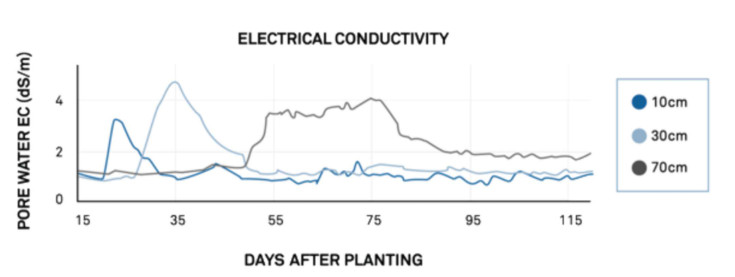
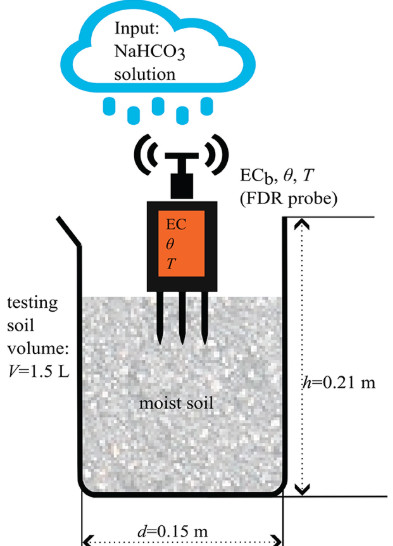
2. Soil Electrical Conductivity.
Related Article
Reference Link
https://www.nrcs.usda.gov/sites/default/files/2022-10/Soil%20Electrical%20Conductivity.pdf