
Albedo | Web Scraping Tool | ScrapeStorm
Abstract:Albedo is an indicator of how much incident radiation, such as sunlight, is reflected by the Earth's surface or the surface of an object. It is typically expressed as a dimensionless value between 0 and 1, or as a percentage (%), where higher values indicate higher reflectivity and lower values indicate greater absorption of energy. For example, fresh snow has a very high albedo, reflecting most sunlight. In contrast, forests, oceans, and asphalt pavements have relatively low albedo, absorbing more energy. Albedo is a key physical quantity significantly involved in Earth's energy balance and climate system, and is utilized in many fields including climate science, environmental research, remote sensing, and urban climatology. ScrapeStormFree Download
ScrapeStorm is a powerful, no-programming, easy-to-use artificial intelligence web scraping tool.
Introduction
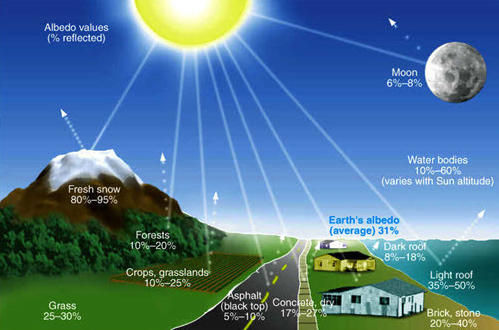
Albedo is an indicator of how much incident radiation, such as sunlight, is reflected by the Earth’s surface or the surface of an object. It is typically expressed as a dimensionless value between 0 and 1, or as a percentage (%), where higher values indicate higher reflectivity and lower values indicate greater absorption of energy. For example, fresh snow has a very high albedo, reflecting most sunlight. In contrast, forests, oceans, and asphalt pavements have relatively low albedo, absorbing more energy. Albedo is a key physical quantity significantly involved in Earth’s energy balance and climate system, and is utilized in many fields including climate science, environmental research, remote sensing, and urban climatology.
Applicable Scene
Albedo is widely used in understanding and managing both global and urban environments. In climate research, it serves as an important parameter for assessing Earth’s radiation budget and is used to analyze the impact of changes in ice sheets and snow-covered areas on climate change. In remote sensing, albedo derived from satellite data enables analysis of surface reflection characteristics, aiding in land cover classification, vegetation condition assessment, and monitoring of desertification and forest changes. In the field of urban environments, efforts to mitigate the urban heat island effect involve increasing the albedo of building roofs and paving materials, with applications in environmental design and sustainable urban planning. In the energy sector, albedo is used for evaluating installation sites for solar power facilities and analyzing the impact of surface reflection on power generation efficiency.
Pros: Understanding albedo allows for quantitative evaluation of the relationship between surface energy absorption and reflection, contributing to the elucidation of climate change mechanisms and environmental management. Albedo changes in snow and ice areas, in particular, serve as important indicators for understanding feedback effects in global warming. In urban environments, architectural designs using high-albedo materials can suppress surface temperature increases, contributing to reduced cooling energy consumption and heat island mitigation. Additionally, albedo data obtained through satellite observations can be acquired over wide areas continuously, serving as reliable foundational data for environmental monitoring and land use change analysis.
Cons: Albedo is influenced by many factors such as solar altitude, observation angle, surface moisture, roughness, and seasonal changes, making accurate measurement and comparison challenging. For instance, the albedo of snow and ice can change rapidly over time or due to the accumulation of pollutants. Albedo estimation via satellite observations is also susceptible to the effects of clouds and atmospheric scattering, requiring correction processes. Furthermore, as albedo alone cannot fully evaluate the surface thermal environment or climate impacts, comprehensive analysis combining data on temperature, radiation budget, land use, and other factors is necessary.
Legend
1. Examples of albedo for major land surface types.
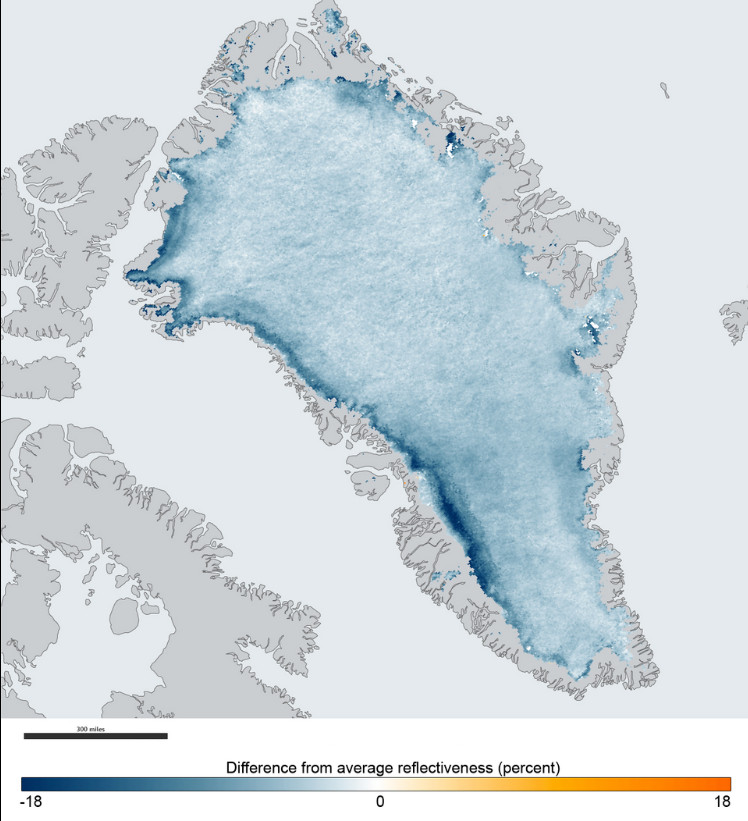
2. Albedo change in Greenland.
Related Article
Reference Link
https://en.wikipedia.org/wiki/Albedo
https://www.sciencedirect.com/topics/earth-and-planetary-sciences/albedo